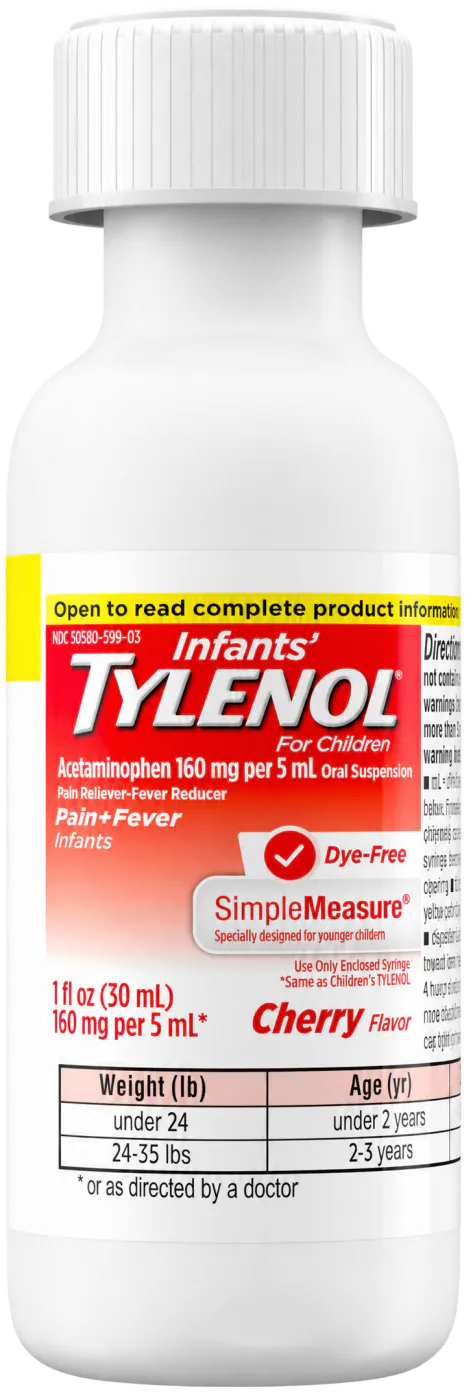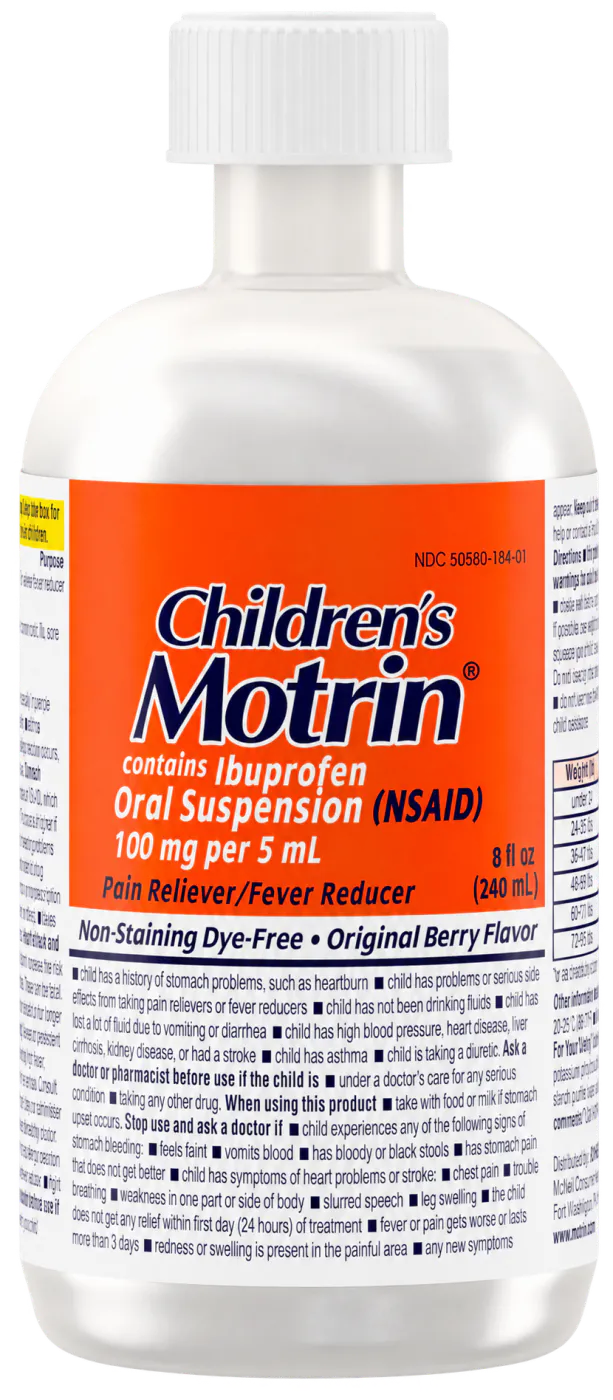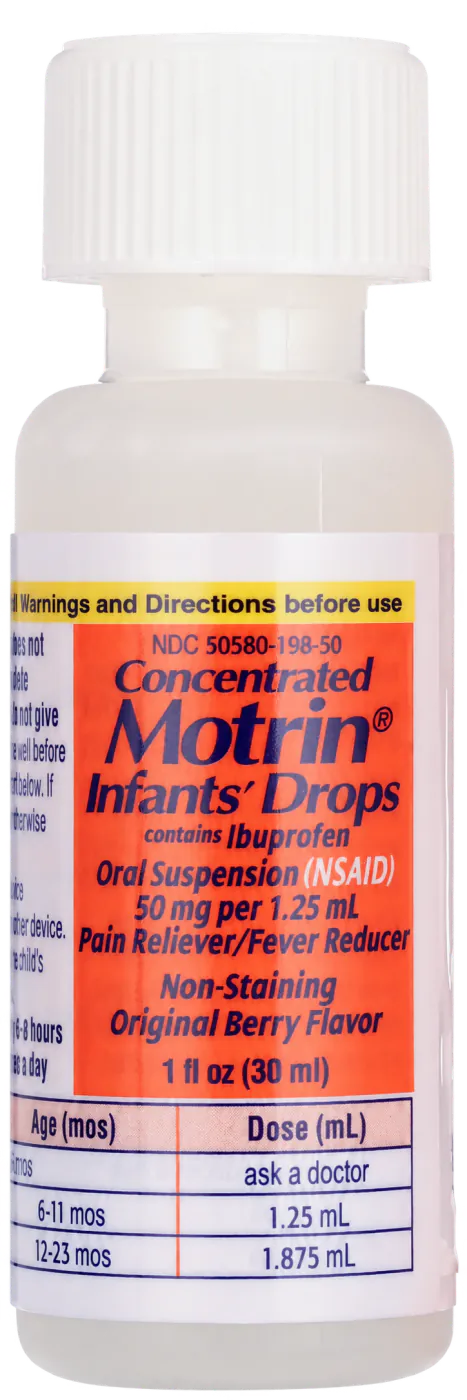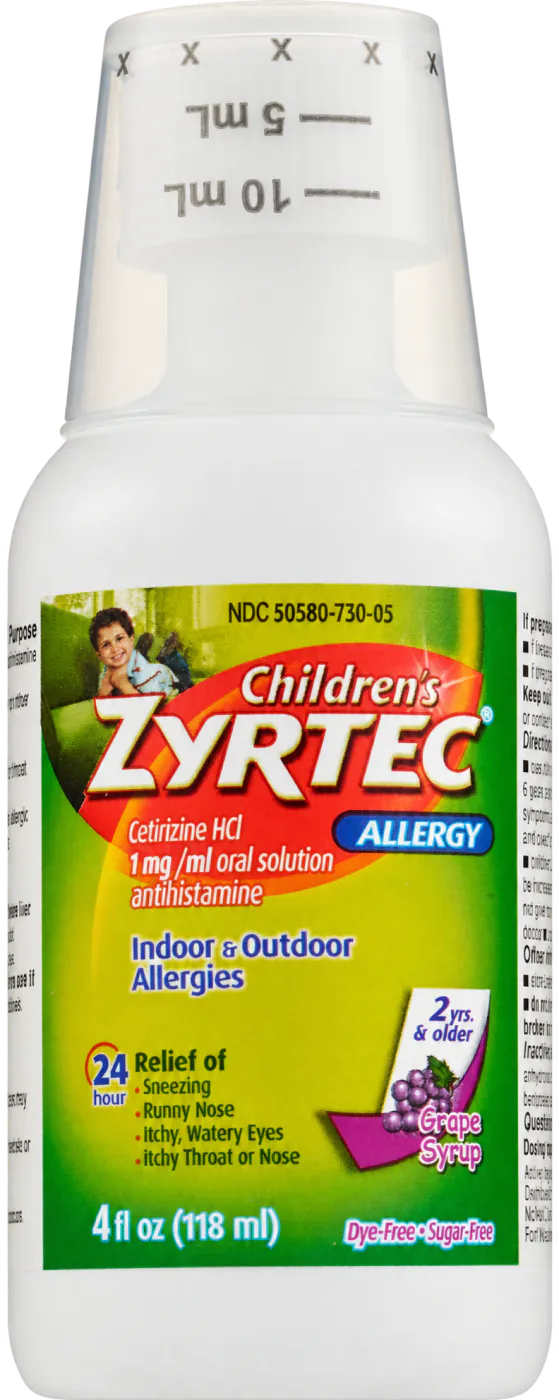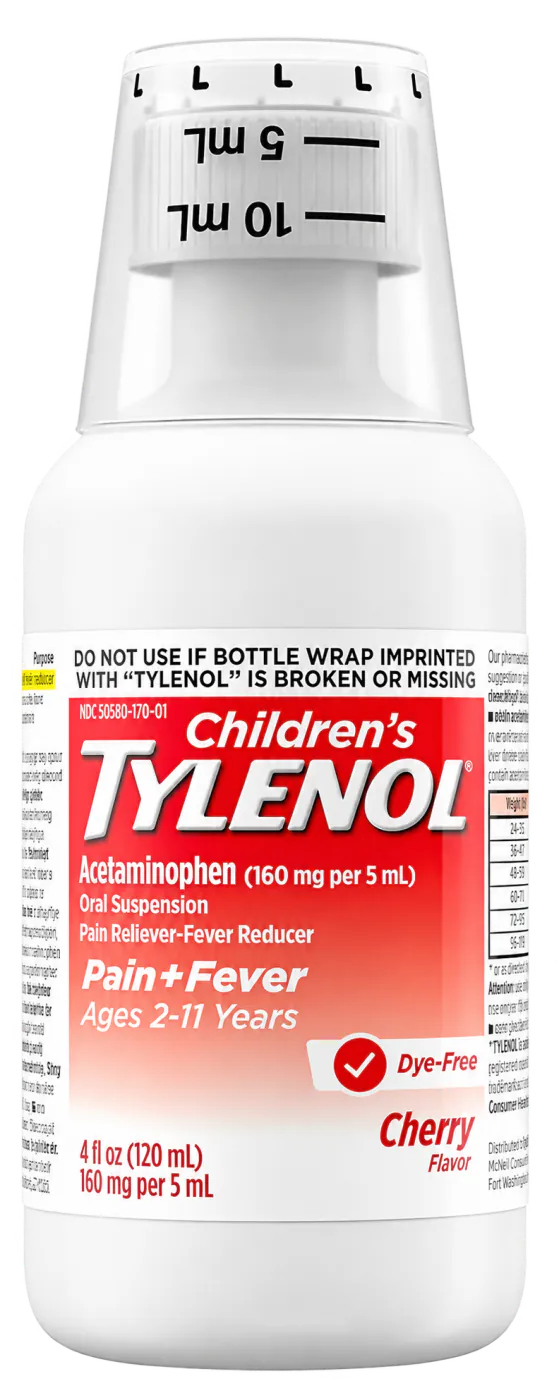
Oral suspension · US label
Children’s TYLENOL
- Ingredient:
- Acetaminophen
- Printed strength:
- 160 mg / 5 mL

Kilograms and pounds describe body weight; milligrams describe medicine amount; milliliters describe liquid volume. Converting a weight does not establish a medicine dose or show that a different bottle’s directions apply.
Select a package to see its printed strength. Packaging can change; check your own label.
Oral suspension · US label
Oral suspension · US label
Oral suspension · US label
Concentrated drops · US label
Syrup · US label
The fever-medicine references here use the manufacturers’ printed pound and age bands. The Zyrtec syrup reference uses age groups. A search for “dose by kg” does not make these tools continuous mg/kg calculators.
If your measurement and the package use different units, or the value falls between the printed rows, ask a pharmacist or clinician to clarify the applicable directions. Do not choose a larger band merely because the tool offers it. Age restrictions remain relevant even when a weight seems to match.
A label such as 160 mg per 5 mL describes the liquid strength. It is neither a child’s weight nor an instruction to give 5 mL. Read the amount, timing and limits from the correct product’s full directions and use its supplied device.
These are educational references for the exact US products shown, not personalized prescriptions or clinically reviewed dosing protocols. Read your package’s full Drug Facts. Product guides do not expand the bottles supported by the calculators.
Sources checked and page updated: 2026-10-23. This records source verification, not clinical review.